What is e-commerce? The five layers of an operating model
Selling online is only the outer layer. There are four more beneath it, and the last one is the P&L. This piece walks through each layer, the numbers to read weekly, and how to spot that you are selling plenty and still losing money.

What is E-commerce? Operating Model from Strategy to P&L
E-commerce is selling goods over the internet. That definition is correct but useless if you're trying to operate a real system. This article does not explain it in a dictionary sense but rather delves into how a business needs to think about it: from strategic decisions to the monthly P&L figures.
What E-commerce looks like in reality
Most founders start by opening a Shopee store or building a website. A few months later, they add TikTok Shop. Then Facebook. Then Zalo. By this point, they are operating 4-5 separate channels, each managed by a different person, with unsynchronized data, and no idea which channel is truly profitable.
That is not e-commerce. That is fragmented online selling.
E-commerce, in the true operational sense, is when you can answer: which products are profitable, which channels are losing money, which customers are worth retaining, and what needs to be done differently next month.
3 common models in Vietnam
D2C (Direct to Consumer): Selling directly to end-users via your own website or app. You control pricing, customer data, and the shopping experience. However, you have to generate your own traffic, as no marketplace will push your products.
B2B Online: Selling to other businesses through an online ordering system. Orders are larger, sales cycles are longer, and purchasing decisions are more complex.
Marketplace-first: Selling primarily on Shopee, Lazada, TikTok Shop. Ready-made traffic is available, but you are dependent on the platform's algorithms and policies. Margins are often lower than D2C due to commission fees and in-platform advertising costs.
Operational Framework: 5 layers from Strategy to P&L
Layer 1, Strategy: What to sell, to whom, and why customers choose us instead of competitors.
Layer 2, Channels: Website, marketplaces, social media, physical stores.
Layer 3, Marketing: How to drive people to channels, how to convert them into paying customers.
Layer 4, Operations: Warehousing, packaging, delivery, returns, customer service.
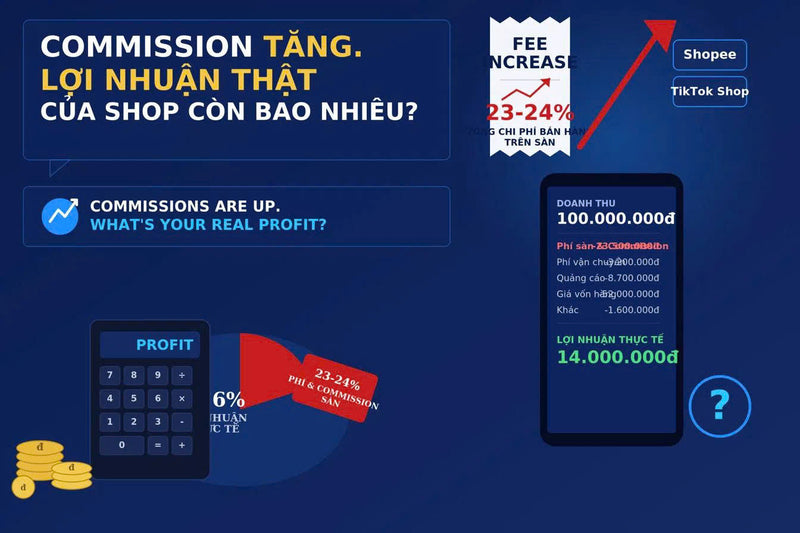
Layer 5, Finance: Revenue, cost of goods sold, marketing expenses, actual profit.
KPIs to track weekly
Revenue and orders: Total revenue, number of orders, AOV by channel.
Marketing: CPO, conversion rate, ROAS by campaign.
Operations: Successful delivery rate, return rate, order processing time.
Finance: Gross margin by product and channel, MER, cash flow.
FAQ
Is e-commerce different from "thương mại điện tử"?
No difference. "Thương mại điện tử" is the Vietnamese translation of e-commerce.
Should I start with a website or a marketplace?
If the product has not been validated, start with a marketplace because it has existing traffic. Once the product is proven to sell, build a website to control data and achieve better margins.
Need advice on solutions suitable for your industry?
Hallovis advises free of charge, matched to your scale and your sales channels. We reply within 01 to 02 business days.